
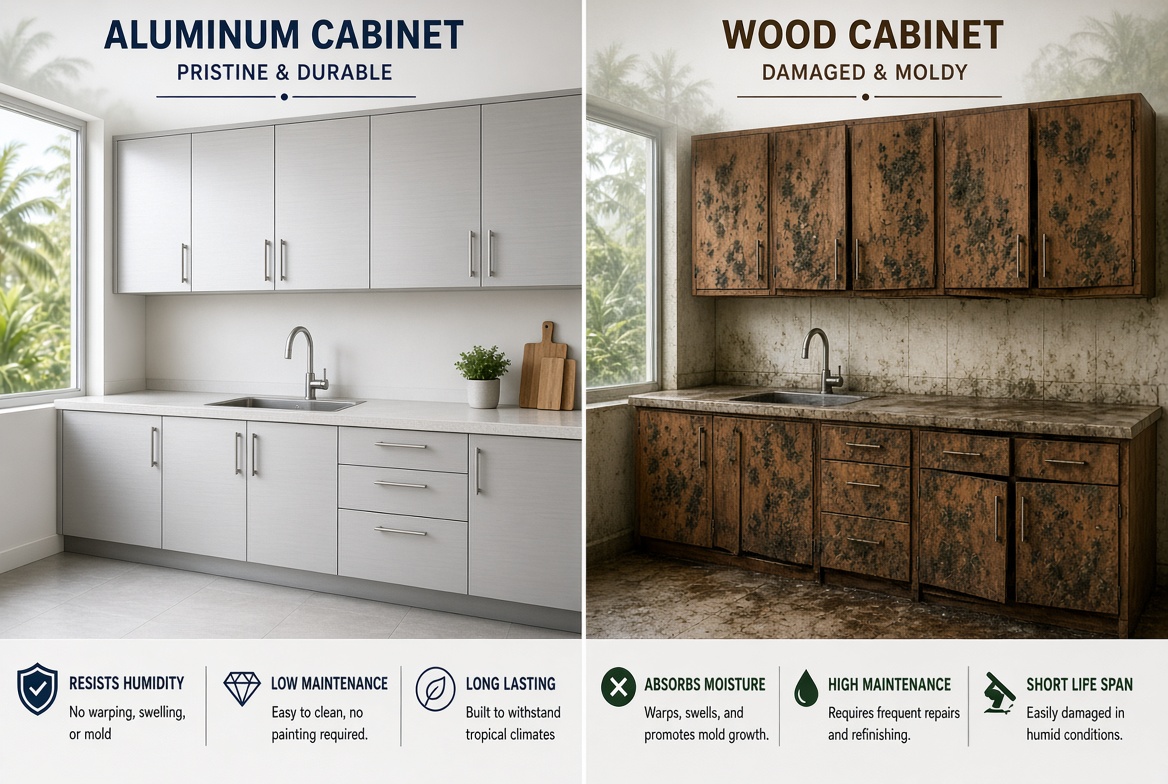
Complete moisture resistance: Aluminum is non-porous and does not absorb water. It will not swell, warp, delaminate, or develop mold even under constant steam, condensation, or high ambient humidity.
100% termite and pest immunity: As an inorganic metal, aluminum provides no food source for termites or other wood-boring insects that thrive in African soils and climates.
Heat and dimensional stability: Aluminum maintains its shape and strength under high temperatures common in African kitchens and outdoor-adjacent spaces. Powder-coated or anodized finishes further protect against corrosion.
Fire resistance and hygiene: Aluminum does not burn easily and offers a non-porous surface that is easy to clean and resists bacteria buildup — critical for commercial kitchens, hospitals, and schools.
These properties make aluminum cabinets especially suitable for wet kitchens, coastal projects, and high-moisture zones where wood-based alternatives typically last only 8-15 years before requiring major repairs or full replacement.
Flexible MOQ options (often starting from 1 ton of profiles or 20-50 complete cabinet sets, with better pricing for full 20ft or 40HQ container loads).
Full OEM/ODM services: custom branding, private labeling, and tailored designs according to project drawings.
Custom sizes and configurations: modular systems that adapt to different kitchen layouts, wall heights, and storage needs common in African residential and commercial buildings.
Export-ready packaging and documentation: suitable for shipping to major African ports, with options for flat-pack modular designs that reduce freight volume and damage risk.
Consistent quality control using alloys such as 6063-T5, combined with durable powder coating or anodizing for long-term performance in humid conditions.
Long-Term Cost Comparison Table
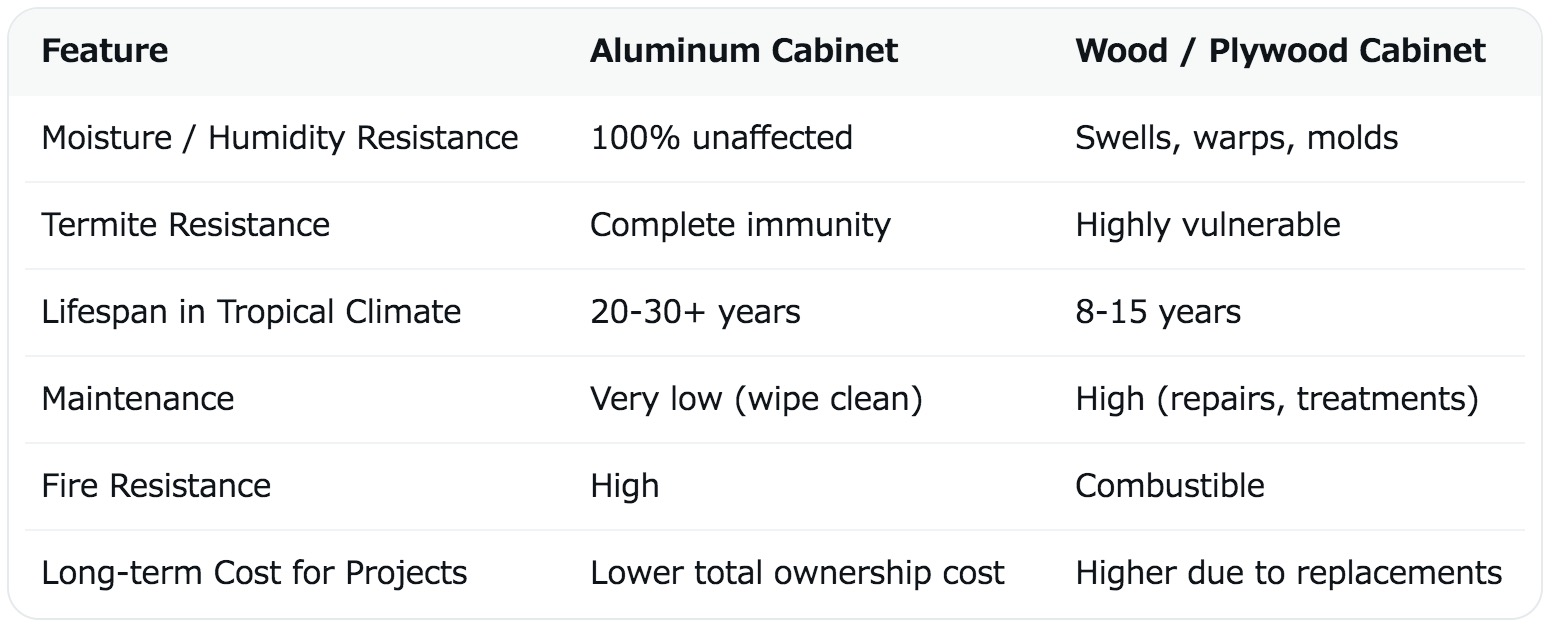
Over a 20-year project lifecycle, the reduced need for repairs, replacements, and pest treatments typically results in significantly lower total cost of ownership for aluminum cabinets, despite a potentially higher initial investment.
Ideal Project Applications Across Africa
Aluminum cabinets perform exceptionally well in a wide range of B2B scenarios:Residential housing developments: Large-scale apartment and housing projects benefit from low-maintenance, termite-proof cabinetry that reduces long-term property management costs.
Hotels and hospitality: Commercial kitchens and guest-area storage require durability under heavy daily use, heat, and moisture — aluminum meets these demands while offering a modern aesthetic.
Commercial kitchens and restaurants: High resistance to steam, grease, and frequent cleaning makes aluminum ideal for professional food-service environments.
Hospitals and clinics: Hygienic, non-porous surfaces and easy disinfection support strict cleanliness standards.
Schools and institutional buildings: Durable, low-maintenance cabinets withstand intensive use by students and staff while remaining termite-proof.
Yes. Their complete resistance to humidity, termites, and heat makes them one of the most reliable options for long-term performance in African conditions.
What is the typical lifespan of aluminum cabinets in high-humidity regions?
With proper powder-coated or anodized finishes, high-quality aluminum cabinets commonly last 20-30 years or more with minimal maintenance.
Yes. Most professional manufacturers offer container-scale volumes, OEM/ODM services, and custom sizing to match specific project requirements.
How do aluminum cabinets compare in total project cost?
While the upfront cost may be higher than basic wood options, the dramatically lower maintenance and replacement needs result in lower total cost of ownership over the life of the building.
Aluminum cabinets provide a proven, practical solution for B2B buyers across Africa who prioritize durability, climate resilience, and long-term value. For project-specific quotations, customization options, or sample requests, contact a reliable manufacturer experienced in African market exports.