
Aluminum vs. Traditional Materials
When choosing furniture, the material dictates the lifespan. All-aluminum furniture utilizes cutting-edge engineering to surpass traditional panels and solid wood in every performance metric.
1. The Craftsmanship: Industrial-Grade Precision
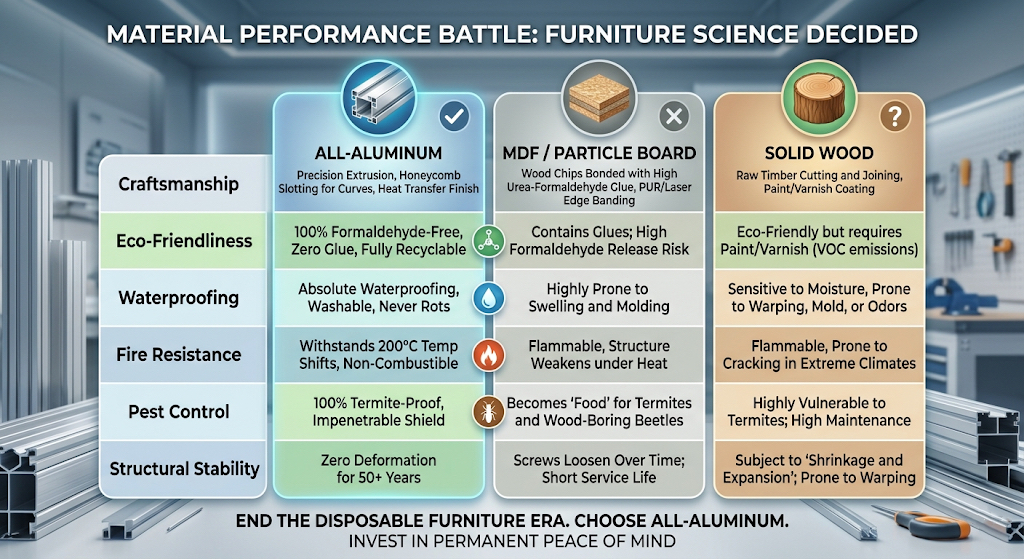
All-Aluminum: Utilizing Aerospace-Grade Aluminum Log Extrusion, our panels feature uniform wall thickness and a dense structural core. The primary breakthrough is the Honeycomb Slotting process, which allows the metal to achieve elegant Customizable Radii (Curves) without sacrificing strength. Finally, Wood-Grain Heat Transfer technology locks natural textures into the surface at high temperatures, ensuring colors never fade.
MDF/Particle Board: These are made by bonding wood chips with high concentrations of Urea-Formaldehyde glues under high pressure. While they often use PUR or Laser Edge Banding, if the seal is compromised, the interior core will inevitably absorb moisture and swell.
Solid Wood: This relies on traditional raw timber cutting and joining. While naturally beautiful, wood fiber limitations make it difficult to achieve complex, industrial-grade precision curves, and it is highly prone to cracking due to seasonal humidity changes.
2. The Ultimate Comparison: Why Aluminum Wins
Below is a conceptual layout for your professional comparison table.
3. Ending the "Disposable Furniture" Era
In the humid climates of Southeast Asia, MDF furniture typically lasts only 3-5 years. While solid wood is premium, it remains vulnerable to termites and intense heat. All-aluminum furniture, through Honeycomb Slotting, achieves the soft aesthetics of wood while retaining the "immortality" of metal.
Furthermore, aluminum is an Investment. Unlike wood, it retains a high Resale Value due to its recyclability, even after decades of use.